What Does the Bible Say About Tattoos?
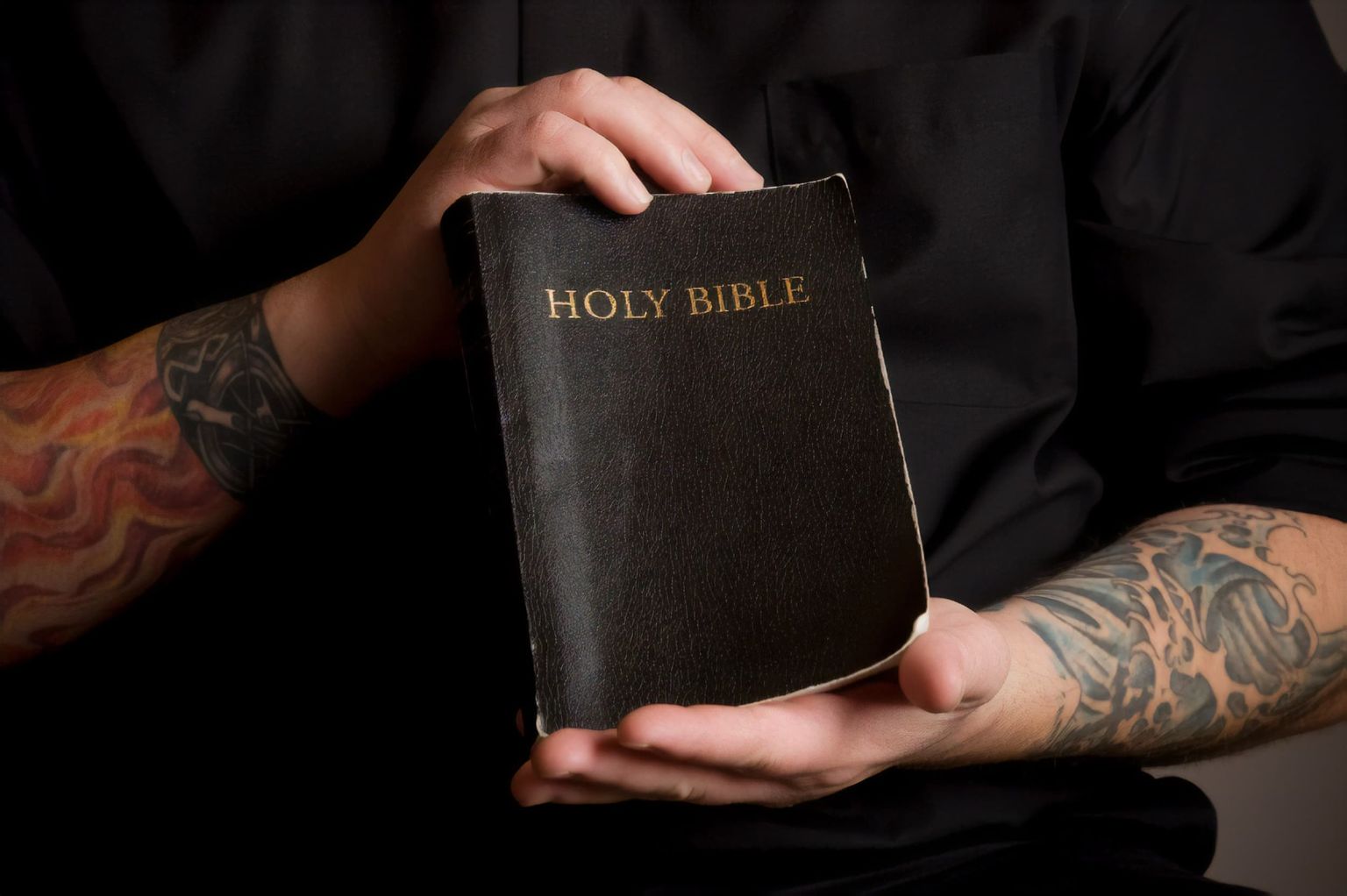
Leviticus 19:28 in context, what the New Testament does and doesn’t say, and how Jewish law, Catholics, Protestants and Coptic Christians answer the tattoo question.
Related galleries
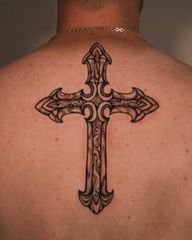
The Bible mentions tattooing once. Leviticus 19:28 tells the Israelites not to cut their bodies for the dead or put marks on their skin. Modern translations such as the NIV call these “tattoo marks.” The New Testament never mentions tattoos, and Jesus says nothing about them. Most churches don’t treat the Leviticus law as binding on Christians, so the choice is usually left to personal conscience.
Summary
- The King James Version doesn’t use the word “tattoo,” but the NIV, ESV, NASB and NLT do.
- Verses quoted on both sides, like 1 Corinthians 6:19–20 and Revelation 19:16, are about something else.
- Catholic teaching doesn’t forbid tattoos, Protestant churches differ, and Orthodox Judaism keeps the ban.
- Many Coptic Christians in Egypt wear a small cross tattooed on the inner wrist.
Does the Bible say anything at all about tattoos?
Yes, in one verse. Leviticus 19:28 reads, in the King James Version: “Ye shall not make any cuttings in your flesh for the dead, nor print any marks upon you: I am the Lord.” The New International Version puts it more plainly: “Do not cut your bodies for the dead or put tattoo marks on yourselves. I am the Lord.”
Is the word “tattoo” in the Bible?
It depends on the translation. The King James Version, from 1611, couldn’t use it. The English word comes from the Polynesian tatau and first appears in journals from Captain Cook’s 1769 visit to Tahiti. Modern translations use it in Leviticus 19:28 and nowhere else, as in the ESV’s “or tattoo yourselves.” The Hebrew word behind it occurs only in this verse, so “tattoo” is a fair reading but still a judgment call.
What does Leviticus 19:28 mean in context?
Leviticus 19 mixes laws Christians still quote with laws few of them follow. “Love your neighbor as yourself” is in verse 18. Next to it are bans on cloth woven from two kinds of material (19:19) and on clipping the edges of your beard (19:27).
Verse 28 pairs the tattoo rule with a ban on cutting yourself for the dead. Because of that, Jewish and Christian commentators have long read it as aimed at mourning rites and marks of devotion to other gods. The verse itself gives no reason, so this is an inference, though an old one.
Jewish law, from the Mishnah on, took the verse literally. Orthodox Judaism still treats tattooing as forbidden.
What does the New Testament say about tattoos?
Nothing directly. No verse in the New Testament mentions tattoos. What it does discuss is whether Christians have to keep the law of Moses. That is where the tattoo question gets decided.
In Acts 15, the apostles in Jerusalem decided that non-Jewish believers didn’t have to keep the full law. They asked them to avoid four things: food sacrificed to idols, blood, the meat of strangled animals and sexual immorality (Acts 15:29). Tattoos aren’t on the list. So most churches read Leviticus 19:28 like the beard and fabric laws: as a code for Israel, not a rule for Christians.
Four passages still come up whenever Christians argue about tattoos. Two are quick to set aside. The mark of the beast in Revelation 13:16 stands for allegiance in a vision. Paul’s “marks of Jesus” in Galatians 6:17 most likely means the scars from his beatings. The other two need a closer look.
1 Corinthians 6:19–20: “your bodies are temples”
“You are not your own; you were bought at a price. Therefore honor God with your bodies.” (NIV) This is the verse quoted most often against tattoos. In context, Paul is writing about sexual immorality. Christians apply it both ways. Some say a tattoo damages a body that belongs to God. Others say a tattoo of their faith honors God with the body. The verse doesn’t settle it.
Revelation 19:16: a name written on the thigh
“And he hath on his vesture and on his thigh a name written, KING OF KINGS, AND LORD OF LORDS.” (KJV) This is the verse behind the claim that Jesus has a tattoo. It comes from a vision full of symbols, and the text doesn’t say how the name is written. Some readers take it as a tattoo. Many commentators read it as written on the robe where it falls across the thigh.
Is getting a tattoo a sin?
Most churches don’t teach that tattoos are a sin, but they don’t all agree.
The Catholic Church has no teaching against tattoos. In 2018, Pope Francis told young adults in Rome “Don’t be afraid of tattoos”. He pointed out that Eritrean Christians have tattooed crosses on themselves for centuries.
Protestant churches vary. Many pastors treat a tattoo as a matter of conscience, the kind of disputed question Paul leaves to each believer in Romans 14. Some conservative churches still discourage tattoos. If the answer matters to you, ask your own pastor or priest. They know your tradition better than a tattoo site does.
Coptic crosses and pilgrim tattoos
Many Coptic Christians in Egypt wear a small cross on the inside of the wrist, often tattooed in childhood. It marks the wearer as Christian, and some churches in Egypt check for it at the door.
Pilgrims to Jerusalem have taken tattoos home as proof of the trip since at least the 1600s. Some studios in Jerusalem still tattoo pilgrims with traditional designs such as the Jerusalem cross.
How do I get a Christian tattoo?
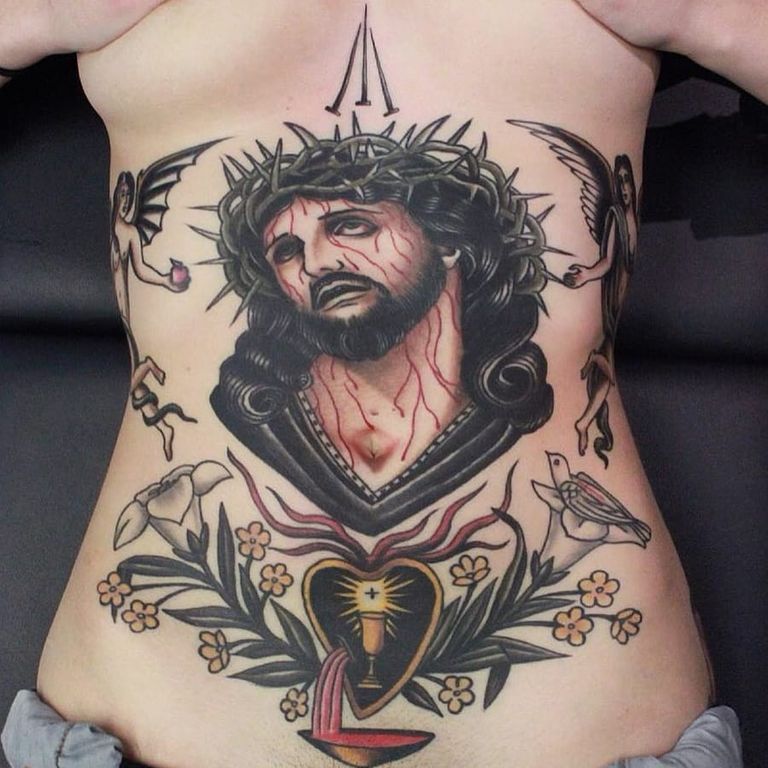
Start with what you want to carry. Common choices are a cross, a Bible verse or its reference, the Sacred Heart, praying hands, a dove or an angel. The Coptic cross and the Jerusalem cross are older designs with the history above behind them. Browse cross tattoo ideas and angel tattoo ideas.
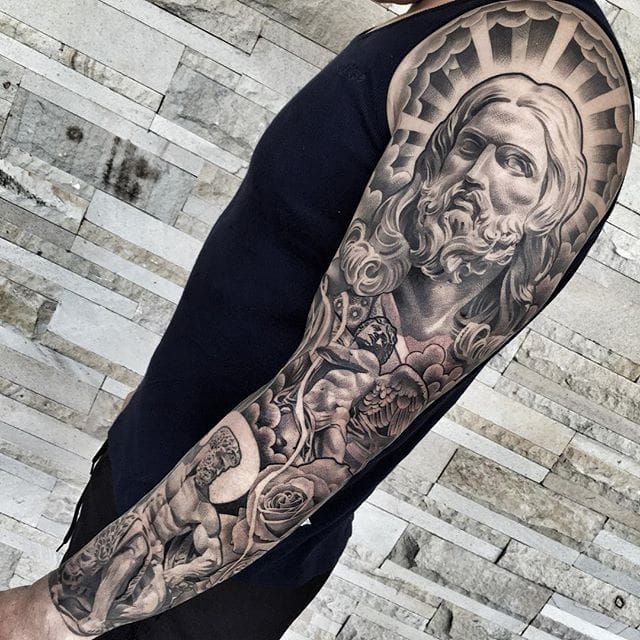
For scripture, pick the translation and copy the text from the source, not from memory. The reference “Psalm 119:105” fits in a couple of inches. The full verse needs letters big enough to stay readable as the ink spreads over the years. If you want small, delicate lettering, read up on how fine line tattoos age first.
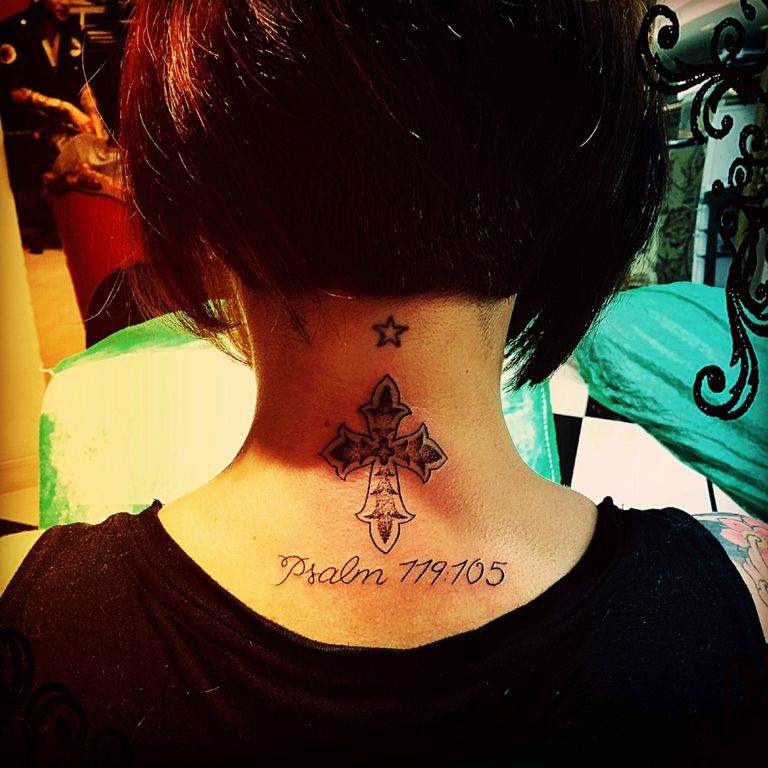
Bring the exact wording, the translation and a rough size to the consultation. Ask to see the lettering at full size before the artist starts. Our guide to talking art with your tattoo artist covers how to brief a design.
Use the Tattoodo artist finder to find artists whose portfolios show clean script at the size you’re planning.